
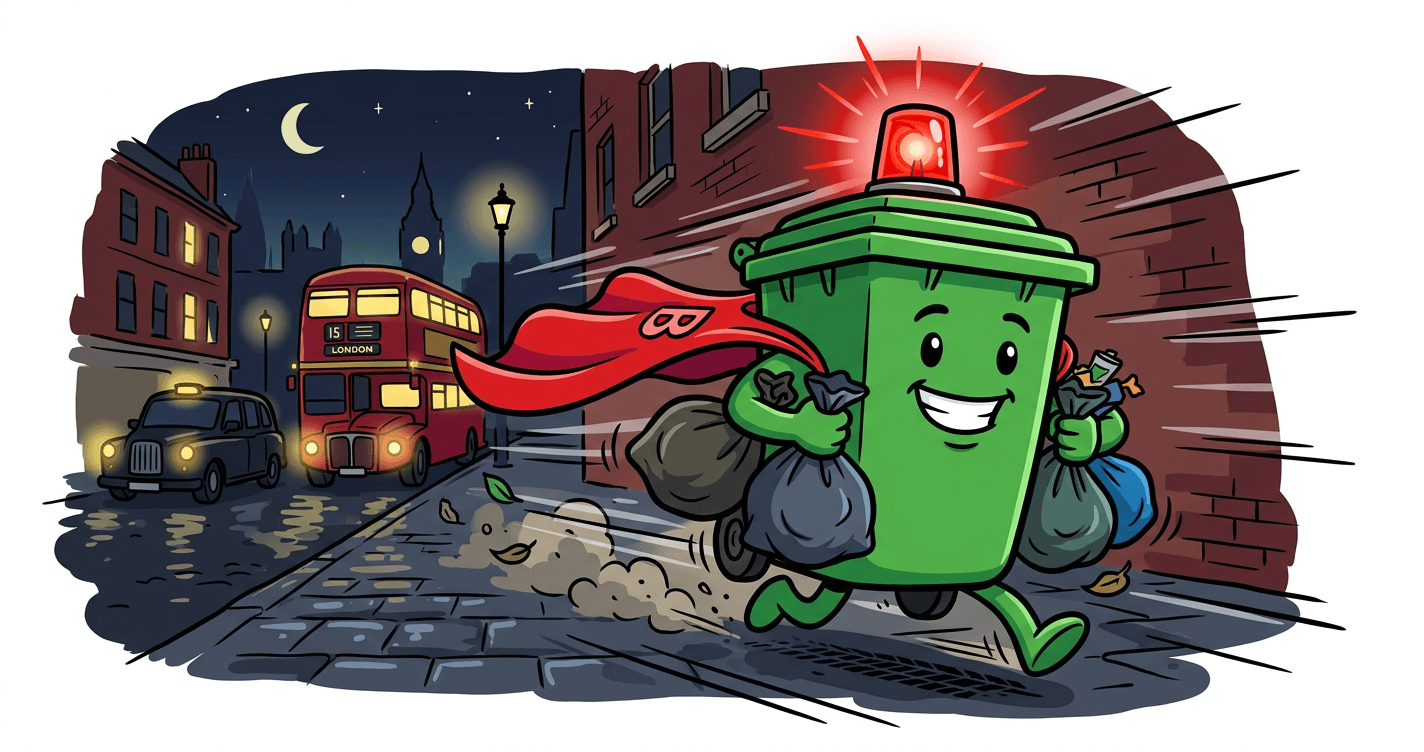
Emergency Waste Collection: When You Need It Most
Nobody plans a waste emergency. That's the whole point — they're emergencies. And the psychology of dealing with unexpected waste is radically different from the psychology of scheduled bin collections.
When you discover fly-tipped mattresses blocking your business entrance at 6am, or come home to find burst pipes have turned your basement into a soggy landfill, your brain doesn't calmly Google "waste collection services." It panics. And panicked decision-making is expensive decision-making.
Here's what actually happens in a waste emergency — and why understanding the process in advance is the single best thing you can do.
The Psychology of Waste Emergencies
Waste emergencies trigger three predictable psychological responses:
1. Shame. This is the big one nobody talks about. Whether it's a hoarding situation, flood damage, or fly-tipping on your property, there's an irrational but powerful feeling that it's somehow your fault. This shame delays action. People spend days "dealing with it themselves" before calling for help — often making the situation worse.
2. Decision paralysis. An emergency creates a dozen simultaneous decisions: Who do I call? Is this hazardous? Do I need the council? Can I just skip-hire? What about insurance? The cognitive overload freezes people into inaction.
3. Cost catastrophising. In a panic, people assume emergency services will be astronomically expensive. This fear prevents them from picking up the phone. In reality, emergency waste collection typically costs 20-40% more than scheduled collection — not the 300% markup people imagine.
What Actually Happens When You Call
Our emergency response follows a simple protocol designed to cut through the panic:
Minutes 0-5: Triage call. We ask three questions: What happened? How much waste? Any hazardous materials? That's it. No lengthy forms. No account setup. Three questions, then we're moving.
Then: a real answer. A person looks at what is already booked for the day and comes back with a yes or a no. Same-day requests close in the morning and the day takes a fixed number of them, so early matters — the cutoff and the premium are stated on the emergency collection page, which reads them off the live booking diary rather than repeating them here. If today is full, you get told that instead of being left to wonder.
On arrival: Assessment. The crew assesses the actual situation — which is often different from the phone description. Not because people lie, but because estimating waste volume under stress is nearly impossible. A "few bags" of flood-damaged belongings turns out to be two tonnes. A "massive" fly-tip is actually three mattresses and a sofa.
Clearance: Methodical, not rushed. Emergency doesn't mean careless. We sort on-site where possible and photograph for insurance documentation. Hazardous waste does not travel on a normal load — we can refer you to a permitted specialist who is registered to carry it, and they quote it and collect it themselves. We tell you that on the phone rather than on the doorstep. Speed matters, but so does doing it right.
The Common Scenarios
Flood and Water Damage
The most emotionally difficult. Water-damaged belongings are simultaneously worthless and priceless. That ruined photo album can't go in a skip, but it also can't be saved. Our crews are trained to be patient with the decision-making process — because throwing away someone's damaged possessions requires sensitivity that pure logistics ignores.
Practical note: Water-damaged waste is significantly heavier than dry waste. A room of flood-damaged furniture can weigh three times what you'd expect. This matters for vehicle capacity and access planning.
Fly-Tipping on Your Property
You didn't create this mess, but legally it's your problem. If waste is dumped on your land, you're responsible for its removal. Unfair? Absolutely. But waiting for the council to act can take weeks, during which the fly-tip attracts more dumping (the broken windows theory applies to waste too).
Our advice: Document everything with photos before we arrive. Report to the council. Then let us clear it. The photos protect you legally and may help identify the culprit.
Post-Event Clearance
Weddings, festivals, corporate events — the aftermath is always worse than anyone planned for. Event waste has a specific character: high volume, mixed materials, spread across a large area. The key is speed, because venues have turnaround deadlines and penalty clauses.
Hoarding Situations
The most sensitive scenario. Hoarding is a recognised condition, and clearance must balance respect for the individual with practical necessity. We work with support workers, family members, and sometimes social services. These jobs take longer, require more care, and are never rushed.
The Economics of Emergency Response
Here's the counter-intuitive bit: emergency waste collection often saves money compared to DIY alternatives.
The maths: hiring a van (£80-120), buying skip bags (£30-50), spending your weekend on it (priceless time), plus tip fees (£50-100 per load). Total DIY cost for a moderate emergency: £300-500 plus an entire day.
Professional emergency clearance for the same volume: £400-600, done in 2-3 hours while you deal with insurance calls, repairs, and everything else that actually needs your attention.
The real cost of a waste emergency isn't the waste removal. It's the opportunity cost of your time, the stress, and the delayed return to normality.
Before the Emergency Happens
The best time to think about emergency waste collection is before you need it. Save our number. Know the process. Understand that calling for help isn't failure — it's efficiency.
Because at 6am on a Monday, standing in front of someone else's dumped rubbish, the last thing you want to do is research waste carriers. You want to make one call and know it's handled.
That's the entire value proposition of emergency response: certainty when everything else is uncertain.
